
Learn how to layer skincare products correctly with this easy step-by-step guide. Discover the right order for cleanser, serum, moisturizer, and SPF for glowing skin.
Wondering how to layer skincare products correctly for the best results? You’re not alone. One of the most common skincare mistakes people make is using great products in the wrong order, which can reduce absorption and make even expensive serums less effective.
The secret to a successful skincare routine is simple: apply products from the lightest texture to the heaviest. This helps active ingredients like vitamin C, hyaluronic acid, and retinol absorb properly before heavier creams lock everything in. Dermatologists commonly recommend starting with cleanser, followed by toner or serum, then moisturizer, and finishing with sunscreen during the day.
Whether you’re building a simple morning routine or a full nighttime regimen, knowing the correct order can help improve hydration, reduce breakouts, and support a healthy skin barrier. In this guide, you’ll learn how to layer skincare products correctly step by step, plus the most common mistakes to avoid for clearer, glowing skin.
Why the Order of Skincare Products Matters
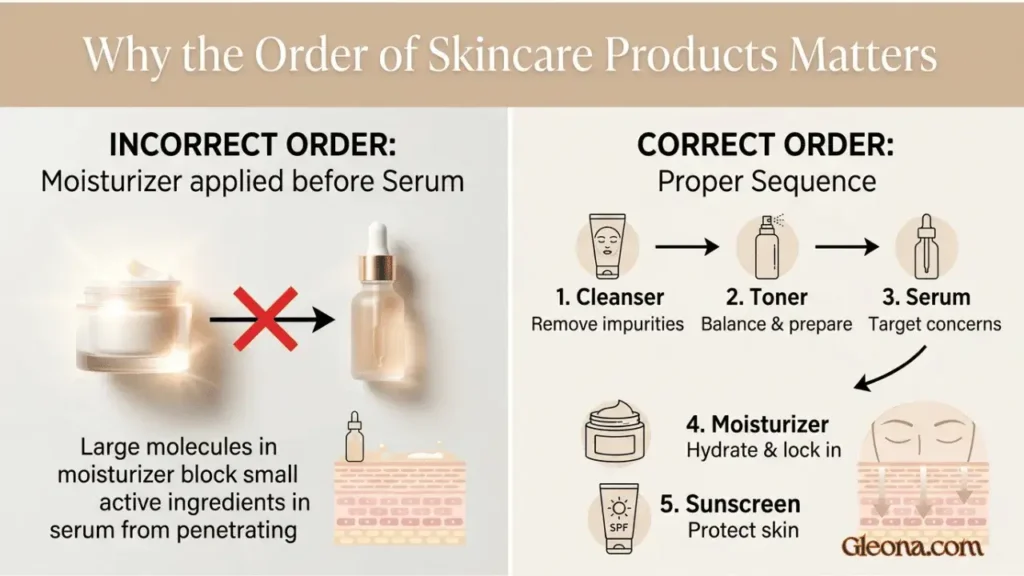
When it comes to building an effective skincare routine, the order in which you apply your products matters just as much as the products themselves. Even the best serums, moisturizers, and treatments may not deliver the desired results if they are used in the wrong sequence.
The general rule followed by dermatologists is to apply skincare products from the lightest consistency to the heaviest. Lightweight, water-based products such as toners and serums need direct contact with the skin so that their active ingredients can absorb properly. Heavier creams, oils, and moisturizers are designed to sit on top of the skin and create a protective barrier that locks in hydration and seals the previous layers.
For example, if you apply a thick moisturizer before a vitamin C serum or hyaluronic acid serum, the heavier layer may block the lighter product from penetrating the skin effectively. This can reduce absorption and make active ingredients far less effective. Some dermatology sources note that improper layering can significantly reduce ingredient absorption.
Another reason order matters is ingredient compatibility. Certain actives, such as retinol, exfoliating acids, and vitamin C, need to be layered correctly to avoid irritation, dryness, or product conflicts. Using them in the wrong order can increase skin sensitivity or weaken your skin barrier.
Think of your skincare routine like getting dressed:
you wouldn’t wear your coat before putting on your shirt. In the same way, skincare works best when you build each layer in the correct order.
Quick Rule to Remember
Cleanser → Toner → Serum → Eye Cream → Moisturizer → Sunscreen (AM only)
Following the right skincare order helps:
- improve product absorption
- boost ingredient effectiveness
- protect the skin barrier
- reduce irritation and breakouts
- keep skin hydrated longer
This simple step can make a noticeable difference in how healthy, smooth, and glowing your skin looks over time.
How to Layer Skincare Products Correctly (Step-by-Step Tutorial)
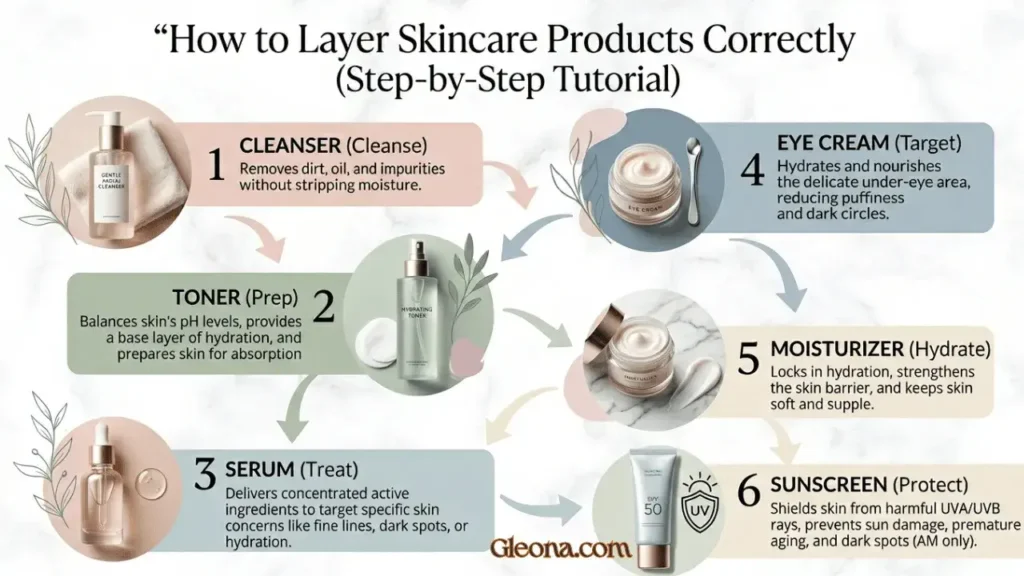
If you’ve ever wondered how to layer skincare products correctly, the easiest rule to remember is this: apply from the thinnest texture to the thickest. Lightweight, water-based products should go first so they can absorb properly, while thicker creams and oils go last to seal everything in.
Below is the correct step-by-step skincare routine for both beginners and skincare lovers.
Step 1: Start with a Gentle Cleanser
Every good skincare routine begins with clean skin. Use a gentle facial cleanser to remove dirt, sweat, oil, sunscreen, and makeup buildup.
Cleansing creates a fresh base so the rest of your products can absorb more effectively.
Best for:
- all skin types
- morning and night routine
Pro Tip:
Use lukewarm water instead of hot water to avoid drying out your skin.
gentle facial cleanser as the first step in how to layer skincare products correctly
Step 2: Apply Toner (Optional but Helpful)
After cleansing, apply toner if it’s part of your routine. Toner helps rebalance the skin, add lightweight hydration, and prep the face for serums.
This step is especially helpful for oily, acne-prone, or dehydrated skin.
Best toner ingredients:
- rose water
- niacinamide
- hyaluronic acid
- green tea extract
- hydrating facial toner used after cleansing in skincare layering routine
Step 3: Use Lightweight Serums and Treatment Products
This is one of the most important steps in learning how to layer skincare products correctly.
Serums are packed with active ingredients and should be applied before moisturizer.
Apply the thinnest serum first if you use multiple serums.
Morning Serum Ideas
- Vitamin C → brightens and protects
- Hyaluronic Acid → deeply hydrates
- Niacinamide → controls oil and pores
Night Serum Ideas
- Retinol → anti-aging and texture
- Salicylic Acid → acne treatment
- Peptides → skin repair
Pro Tip:
Wait 30–60 seconds between layers for better absorption.
vitamin c serum in correct skincare layering order
Step 4: Apply Eye Cream
Use eye cream after serums but before moisturizer.
Gently tap a small amount around the under-eye area using your ring finger.
This helps target:
- dark circles
- fine lines
- puffiness
- dryness
Avoid rubbing too hard because the eye area is delicate.
eye cream application before moisturizer in skincare routine
Step 5: Lock It In with Moisturizer
Moisturizer is essential because it helps seal in the hydration and active ingredients from the previous steps.
This step supports your skin barrier and prevents moisture loss throughout the day or night.
Choose based on skin type:
Oily skin:
lightweight gel moisturizer
Dry skin:
rich cream with ceramides
Sensitive skin:
fragrance-free moisturizer
face moisturizer used after serum in correct skincare order
Step 6: Finish with Sunscreen (Morning Only)
In the daytime, sunscreen should always be the final step in your skincare routine.
This protects your skin from:
- UV damage
- premature aging
- dark spots
- hyperpigmentation
Use SPF 30 or higher.
Never skip sunscreen, especially if you use vitamin C, retinol, or exfoliating acids.
sunscreen as final step in how to layer skincare products correctly
Correct Morning Skincare Routine Order

A proper morning skincare routine helps protect your skin throughout the day while keeping it fresh, hydrated, and glowing. If you’re wondering about the correct morning skincare routine order, the key is to apply products from the lightest texture to the heaviest, and always finish with sunscreen.
Here’s the ideal step-by-step order for your morning routine:
1. Cleanser
Start your day with a gentle facial cleanser to remove overnight oil, sweat, and product buildup.
Choose a cleanser that suits your skin type:
- gel cleanser for oily skin
- cream cleanser for dry skin
- fragrance-free cleanser for sensitive skin
This creates a clean base so the rest of your skincare products absorb better.
2. Toner (Optional)
If you use toner, apply it right after cleansing.
A hydrating or balancing toner helps prep your skin and can add an extra layer of moisture.
Popular morning toner ingredients:
- hyaluronic acid
- rose water
- niacinamide
- green tea extract
3. Vitamin C Serum or Lightweight Serum
Morning is the best time for vitamin C serum because it helps brighten the skin and provides antioxidant protection against environmental stressors.
You can also use:
- hyaluronic acid serum for hydration
- niacinamide for pores and oil control
Apply a few drops and gently pat it into the skin.
4. Eye Cream
Apply eye cream gently around the under-eye area to reduce puffiness, dryness, and the appearance of fine lines.
Use your ring finger and lightly tap the product in.
5. Moisturizer
Next, apply a lightweight moisturizer to lock in hydration and keep your skin barrier healthy throughout the day.
Best options:
- gel moisturizer for oily skin
- cream moisturizer for dry skin
- fragrance-free lotion for sensitive skin
6. Sunscreen (Most Important Step)
This is the final and most important step in the morning skincare routine.
Always use a broad-spectrum SPF 30 or higher to protect your skin from:
- UV damage
- premature aging
- dark spots
- sunburn
Sunscreen should always go on after moisturizer and before makeup.
Quick Morning Routine Order Summary
Cleanser → Toner → Vitamin C Serum → Eye Cream → Moisturizer → Sunscreen
Correct Night Skincare Routine Order

Your nighttime skincare routine is when your skin gets the best chance to repair, recover, and deeply absorb active ingredients. Unlike the morning routine, the focus at night is less about protection and more about hydration, treatment, and skin renewal.
If you’re looking for the correct night skincare routine order, follow the steps below from the lightest product to the heaviest.
1. Cleanser
Start by cleansing your face thoroughly to remove:
- makeup
- sunscreen
- dirt
- excess oil
- pollution buildup
If you wear makeup or SPF, double cleansing can be a great option.
Double cleanse order:
- oil cleanser or cleansing balm
- gentle water-based cleanser
This helps create a perfectly clean base for treatment products.
2. Toner (Optional)
After cleansing, use toner to rebalance the skin and add a light layer of hydration.
Nighttime is a great time to use calming toners with ingredients such as:
- centella asiatica
- hyaluronic acid
- niacinamide
- aloe vera
3. Treatment Serum / Active Ingredients
This is the most important treatment step in your nighttime routine.
At night, your skin is more receptive to active ingredients that help improve texture, acne, and signs of aging.
Popular nighttime actives include:
- Retinol → fine lines and anti-aging
- Salicylic Acid → acne and clogged pores
- Niacinamide → oil control and barrier support
- Peptides → repair and firmness
- Hyaluronic Acid → overnight hydration
Pro Tip:
If using retinol, start 2–3 nights per week to avoid irritation.
4. Eye Cream
Apply eye cream after serum to target:
- puffiness
- dryness
- dark circles
- fine lines
Use a small amount and gently tap around the eye area.
5. Moisturizer / Night Cream
Finish with a moisturizer or richer night cream to lock in all the treatment layers underneath.
Night creams are often thicker and more nourishing than daytime moisturizers.
Look for ingredients like:
- ceramides
- peptides
- hyaluronic acid
- squalane
This final step helps support overnight skin repair.
Optional Final Step: Facial Oil or Sleeping Mask
If you have dry skin, you can finish with a facial oil or sleeping mask as the last layer.
This creates an occlusive barrier that seals in moisture overnight.
Best for:
- dry skin
- dehydrated skin
- winter routines
Quick Night Routine Order Summary
Cleanser → Toner → Treatment Serum / Retinol → Eye Cream → Moisturizer / Night Cream → Facial Oil (Optional)
Common Skincare Layering Mistakes to Avoid
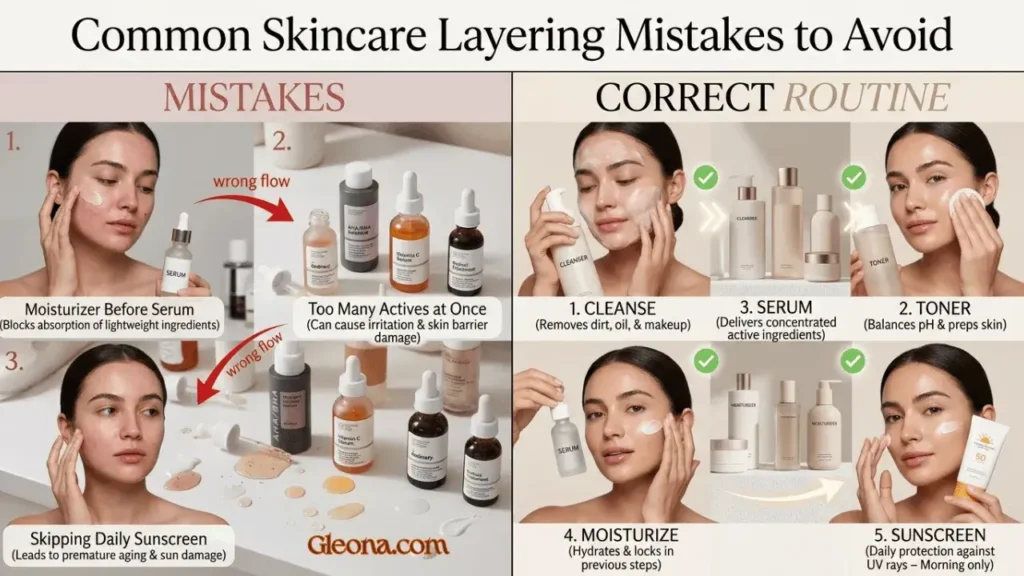
Even if you’re using high-quality skincare products, applying them in the wrong way can reduce their effectiveness or even irritate your skin. Understanding the most common mistakes helps you get the best results from your routine.
Below are the top skincare layering mistakes to avoid.
1. Applying Products in the Wrong Order
One of the biggest mistakes is applying heavy products before lightweight ones.
For example, putting moisturizer on before serum can create a barrier that prevents active ingredients from absorbing properly.
Always follow this simple rule:
thinnest to thickest texture
That means:
cleanser → toner → serum → moisturizer → sunscreen
This is the foundation of learning how to layer skincare products correctly.
2. Using Too Many Active Ingredients Together
Layering too many strong actives in one routine can overwhelm your skin and lead to irritation.
Be careful when combining:
- retinol
- salicylic acid
- glycolic acid
- lactic acid
- vitamin C
For example, using retinol with exfoliating acids on the same night may cause redness, peeling, or dryness.
A safer approach is to alternate them on different days.
Example:
- vitamin C in the morning
- retinol at night
3. Skipping Sunscreen in the Morning
This is one of the most common and most damaging mistakes.
If you use products like:
- vitamin C
- retinol
- AHAs / BHAs
- dark spot treatments
your skin can become more sensitive to sunlight.
Always finish your morning routine with broad-spectrum SPF 30 or higher.
Skipping sunscreen can lead to:
- dark spots
- premature aging
- sun damage
- reduced results from skincare treatments
4. Not Waiting Between Layers
Applying products too quickly one after another may prevent proper absorption.
Give each layer around 30–60 seconds to settle into the skin before applying the next step.
This is especially important for:
- serums
- retinol
- treatment products
5. Overusing Product Amounts
Using more product does not always mean better results.
Too much serum, moisturizer, or retinol can clog pores or irritate the skin.
General guide:
- cleanser → coin-sized amount
- serum → 2–3 drops
- moisturizer → pea-sized amount
- sunscreen → two-finger rule
6. Mixing Incompatible Ingredients
Some ingredients do not work well together when layered in the same routine.
Common combinations to avoid:
- retinol + AHA/BHA
- benzoyl peroxide + retinol
- vitamin C + strong exfoliating acids (for sensitive skin)
If unsure, keep active ingredients in separate AM and PM routines.
7. Ignoring Skin Type
A routine that works for oily skin may not work for dry or sensitive skin.
For example:
- heavy oils may clog oily skin
- strong acids may irritate sensitive skin
- gel moisturizers may not be enough for dry skin
Always choose products based on your skin type.
How to Layer Products Based on Skin Type

Not every skincare routine works the same for everyone. While the basic layering rule remains lightest to heaviest, the types of products you choose should depend on your skin type.
Learning how to layer products based on skin type helps you get better results and avoid common issues like dryness, clogged pores, or irritation.
For Oily Skin
If you have oily skin, the goal is to control excess sebum without stripping away moisture.
Recommended layering order:
Cleanser → Toner → Niacinamide / Salicylic Acid Serum → Lightweight Gel Moisturizer → Sunscreen
Best product types:
- foaming or gel cleanser
- alcohol-free toner
- niacinamide serum
- oil-free gel moisturizer
- matte sunscreen
Pro Tip:
Avoid thick creams and heavy facial oils, as they may clog pores and make the skin feel greasy.
Suggested Alt Text:
skincare layering routine for oily skin with gel moisturizer and niacinamide serum
For Dry Skin
Dry skin needs extra hydration and moisture-locking layers.
Recommended layering order:
Cream Cleanser → Hydrating Toner → Hyaluronic Acid Serum → Rich Moisturizer → Facial Oil (Optional) → Sunscreen
Best product types:
- cream or milk cleanser
- hydrating toner
- hyaluronic acid serum
- ceramide moisturizer
- squalane or facial oil
Pro Tip:
Apply moisturizer while the skin is still slightly damp to lock in hydration.
Suggested Alt Text:
hydrating skincare routine order for dry skin with hyaluronic acid and cream moisturizer
For Combination Skin
Combination skin usually means oily areas in the T-zone and dryness in other areas.
The goal is balance.
Recommended layering order:
Gentle Cleanser → Toner → Niacinamide / Hyaluronic Serum → Lightweight Lotion → Sunscreen
Best product types:
- gentle cleanser
- balancing toner
- multi-benefit serum
- lightweight lotion moisturizer
Pro Tip:
Use slightly more moisturizer on dry areas like cheeks and less on oily zones.
Suggested Alt Text:
balanced skincare layering routine for combination skin
For Sensitive Skin
Sensitive skin needs a simple and soothing routine with minimal active ingredients.
Recommended layering order:
Gentle Cleanser → Soothing Toner → Barrier Repair Serum → Fragrance-Free Moisturizer → Sunscreen
Best ingredients:
- centella asiatica
- ceramides
- aloe vera
- panthenol
- oat extract
Avoid layering too many active ingredients like acids and retinol at once.
Pro Tip:
Patch test every new product before using it in your full routine.
Suggested Alt Text:
sensitive skin skincare layering routine with soothing products
For Acne-Prone Skin
Acne-prone skin benefits from targeted treatment products without over-drying the skin.
Recommended layering order:
Cleanser → Toner → Salicylic Acid / Acne Treatment → Lightweight Moisturizer → Sunscreen
Best ingredients:
- salicylic acid
- niacinamide
- benzoyl peroxide
- non-comedogenic moisturizer
Pro Tip:
Don’t skip moisturizer drying the skin too much can increase oil production.
Suggested Alt Text:
acne-prone skincare routine order with treatment serum and moisturizer
Quick Rule to Remember
No matter your skin type, always follow:
Cleanser → Treatment → Moisturizer → Sunscreen
The difference lies in choosing products that match your skin’s needs.
External Links
- American Academy of Dermatology (AAD) – skincare order AAD Skincare Order Guide
- Healthline – full skincare routine order Healthline Skincare Routine Guide
- CeraVe – moisturizer and sunscreen order CeraVe Layering Guide
Conclusion
Learning how to layer skincare products correctly can make a huge difference in how well your routine works. Even the best products need to be applied in the right order to deliver their full benefits.
The golden rule is simple: apply products from the lightest texture to the heaviest. Start with a gentle cleanser, follow with toner and treatment serums, then lock everything in with moisturizer. In the morning, always finish with broad-spectrum sunscreen SPF 30 or higher to protect your skin from UV damage and premature aging.
Remember that skincare is not one-size-fits-all. Your routine should be adjusted based on your skin type, concerns, and lifestyle. Whether you have oily, dry, sensitive, or acne-prone skin, choosing the right products and layering them correctly helps improve absorption, reduce irritation, and support a healthy skin barrier.
Consistency is key. Results do not happen overnight, but following the correct skincare order every day can lead to healthier, smoother, and more radiant skin over time.
Pro Tip: Keep your routine simple, use products that suit your skin type, and give each layer time to absorb before moving to the next step.
By following this step-by-step guide, you’ll be able to build a routine that works smarter not harder for glowing skin
For more Skin Care Tips and Beauty Ideas, Please visit gleona.com.
Frequently Asked Questions (FAQs)
1. What is the correct order to apply skincare products?
The correct order is to apply skincare products from the lightest texture to the heaviest. A simple routine looks like this:
Morning:
Cleanser → Toner → Serum → Moisturizer → Sunscreen
Night:
Cleanser → Toner → Treatment Serum → Moisturizer
This order helps active ingredients absorb properly and allows heavier products to lock in moisture.
2. Do I apply serum before or after moisturizer?
Serum should always be applied before moisturizer.
Serums are lightweight and contain concentrated active ingredients designed to penetrate the skin deeply. Moisturizer goes on after serum to seal in hydration and lock the treatment layer in place.
3. Should sunscreen be the last step in skincare?
Yes, sunscreen should always be the final step in your morning skincare routine.
Apply sunscreen after moisturizer and before makeup. Use a broad-spectrum SPF 30 or higher for the best daily protection against UV damage and premature aging.
4. How long should I wait between skincare layers?
It’s best to wait around 30 to 60 seconds between each skincare layer.
This gives each product enough time to absorb properly before applying the next one, especially for serums and treatment products like retinol or vitamin C.
5. Can I use multiple serums in one routine?
Yes, you can use multiple serums, but they should be layered from thinnest to thickest consistency.
For example:
Vitamin C serum → Hyaluronic Acid serum → Moisturizer
Be careful not to combine too many strong active ingredients at once, such as retinol and exfoliating acids, to avoid irritation.